The 5-Tool Problem: How Technology Slows Your Agency Down
Most insurance agencies we talk to are running five or six disconnected platforms: a CRM that doesn’t know what happened in the dialer, a compliance system that generates reports nobody reads, and reporting stitched together by hand. Every new tool promises efficiency. Too often, it makes the agency slower.
Five Logins Before the First Call
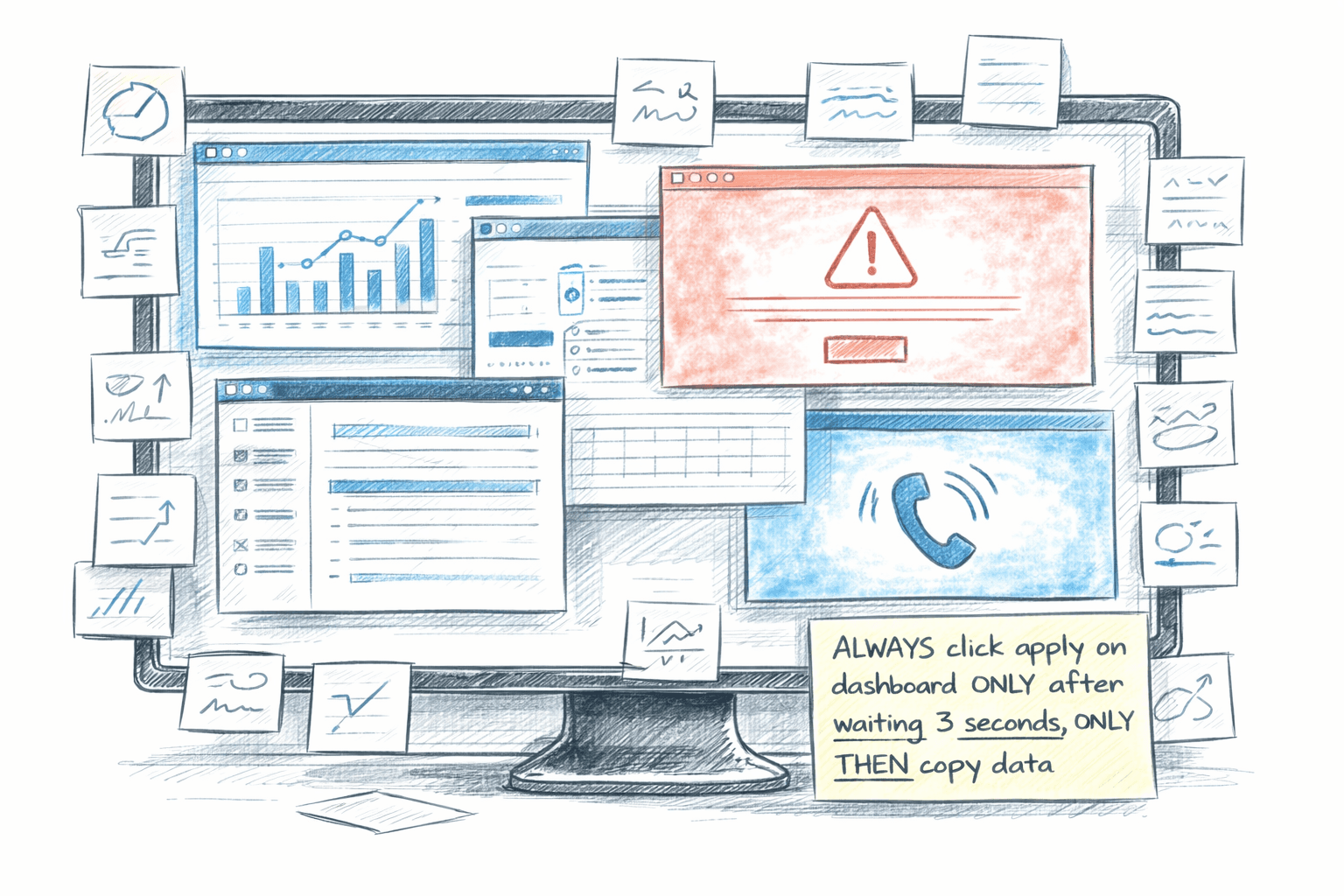
We hear it on nearly every demo. One agency owner described his tech stack as “madness”: six platforms, huge combined bills, and agents context-switching after every call. His team wasn’t selling more. They were navigating more.
Another agency told us their CRM and dialer technically coexisted, but “there’s just some weird stuff in the way they connect.” To get a unified view of the business, the ops team built custom tooling to combine what should have already been one dataset.
That’s the tax nobody budgets for. Not the seat fee. Not the cost per minute. The human cost of holding the stack together by hand.
And the more you grow, the worse it gets. New agents learn five workflows instead of one. Managers pull numbers from three places to answer one question. Compliance reviews mean reconciling recordings, lead records, and timestamps and hoping everything lines up.
Adding a Tool Makes it Worse
When something breaks, the instinct is to buy another tool. A QA platform. An AI scoring add-on. A sync layer between the CRM and the dialer. But every new integration adds another seam, and seams are where things fall apart.
Take compliance scoring. The dialer records the call. Another system transcribes it. A third scores it. The results land in a dashboard disconnected from everything else. Now a manager wants to know whether compliance issues are hurting conversion. The answer lives across three platforms, so the question often never gets answered.
That’s the real cost: not the integration fee, but the questions your team stops asking because the data is too scattered to answer.
One System That Learns From Itself
When the dialer, CRM, compliance engine, and routing logic share one data layer, each action informs the next. Calls get scored in real time. Records update immediately. Follow-up tasks carry the right context. Routing reflects live data, not stale exports.
None of this requires another integration. It’s what happens when the data already lives in one place.