Your Policyholders Are Calling Your Sales Lines: Catch Them
A prospect responds to a Facebook ad, gets transferred to your sales queue, and connects with an agent. The agent runs through disclaimer and qualifying questions, pulls up plan options, and starts building towards an enrollment. Ten minutes in, the prospect mentions they already have a policy. With your agency. Maybe they wanted to adjust coverage. Maybe they were just curious about a better rate. Either way, your sales agent just spent ten minutes on a call that should have gone to your service team.
This happens more often than most agencies realize, especially with lead vendors in the mix. A vendor buys a lead, matches it to your campaign, and passes a phone number through as an inbound transfer. Your system treats it like any other prospect call. But that phone number might already be in your CRM, attached to an active policy your agency wrote six months ago.
When that call goes through to a sales agent, a few things can happen, and none of them are good. The agent might enroll the policyholder into a new plan, churning a policy your agency already holds. That's not just a wasted sale. It damages your carrier metrics, costs valuable agent time, disrupts the customer's coverage, and costs the customer the continuity they had with their existing plan. Even when it doesn't end in a duplicate enrollment, the experience is bad and the agent leaves that conversation frustrated. A policyholder who calls in looking for help and gets a sales pitch instead feels like your agency doesn't know who they are. That's how you lose a customer to a competitor who will.
But there's a signal buried in this problem. If your policyholder is responding to marketing, they're shopping. They're looking at other options, wondering if they could do better. That's not a call to deflect. That's a call to act on.
Policyholder Detection That Works Before the Call Connects
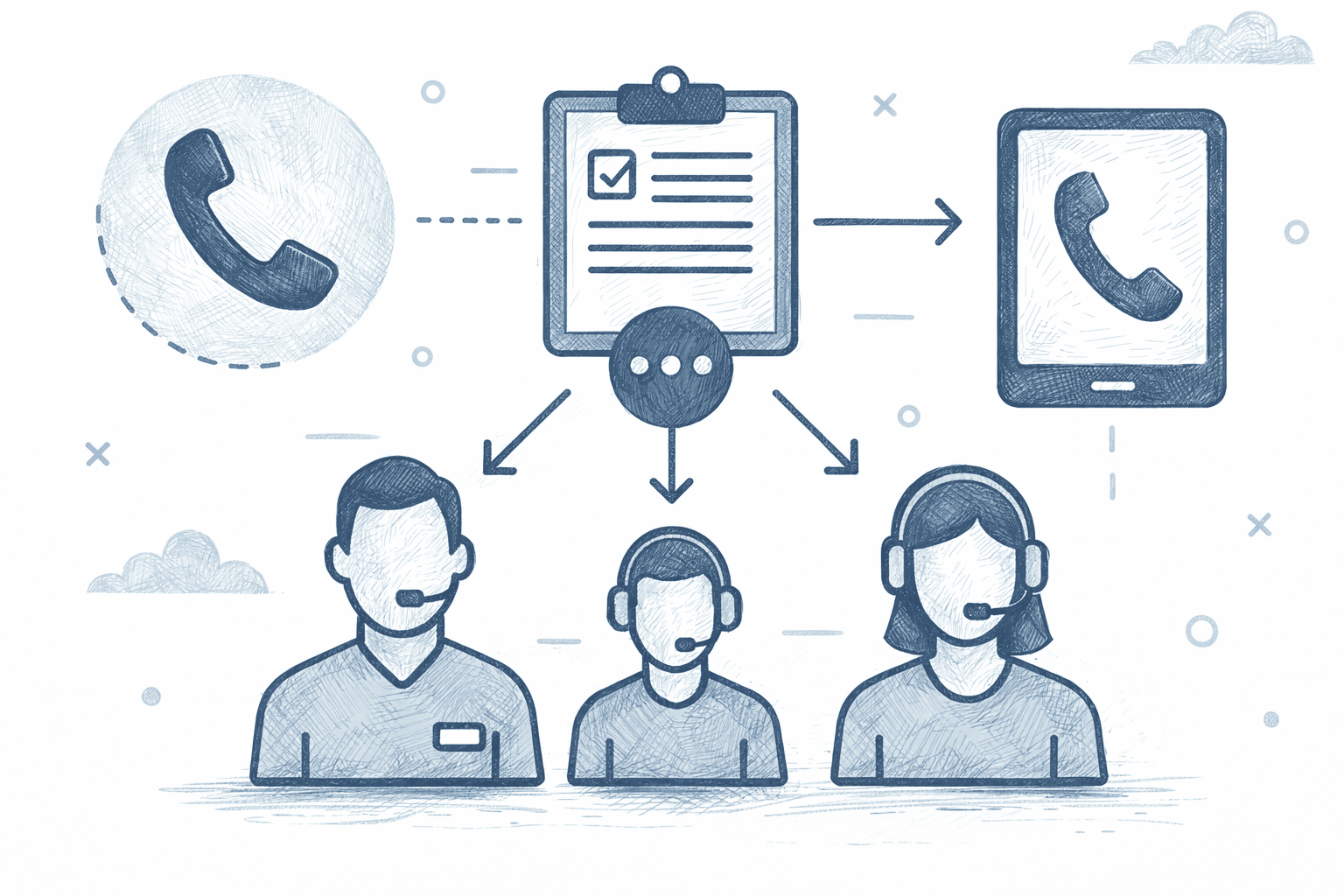
The fix starts with data your CRM already has. When an inbound call arrives, the system performs a lookup across your lead records, person records, and alternative phone numbers. It's checking one question: does this caller have an active policy?
That lookup includes validation. A policy might be canceled, expired, or terminated. The system checks status, cancellation dates, and effective dates to confirm the caller is genuinely a current policyholder. The whole process completes in under 100 milliseconds, well before the call reaches an agent.
Once a policyholder is identified, you get three options depending on how you want to handle the call. You can redirect them to a dedicated service queue, keeping the relationship intact. You can reject the call, useful on high-volume acquisition campaigns where agent time is at a premium. Or you can accept the call normally but flag it, so the agent knows they're talking to an existing customer and managers get visibility into policyholder call volume on that campaign.
A Policyholder Shopping Around Is a Signal, Not a Problem
When a policyholder responds to marketing, they're telling you they're open to change. The question is whether your agency acts on that signal or lets it slip through to a sales queue where it becomes a churn risk.
A service team that receives the call with full context can ask the right questions. What prompted them to look? Is there a gap in their current coverage? Did their situation change? The conversation shifts from selling a new plan to protecting the relationship and adjusting what they already have. The customer gets the help they were actually looking for, your agency keeps the policy, and you avoid losing someone who was yours to begin with.
The configuration is flexible at the campaign level. Acquisition campaigns can filter strictly, keeping agents focused on new prospects. Service campaigns can route policyholders warmly. Mixed campaigns can flag and let agents decide. And the tracking data from every routing decision shows you which lead sources generate the most policyholder overlap, so you can tighten your targeting and stop paying for leads you can't convert.
Every Policyholder Call Is a Decision Point
Your CRM already knows who your policyholders are. The question is whether your call routing uses that data before the call connects. Every policyholder who lands in a sales queue is a retention risk, a wasted call, and a missed chance to strengthen a relationship that's already yours. If you want to see how policyholder routing works inside the Onyx Platform, reach out for a walkthrough.